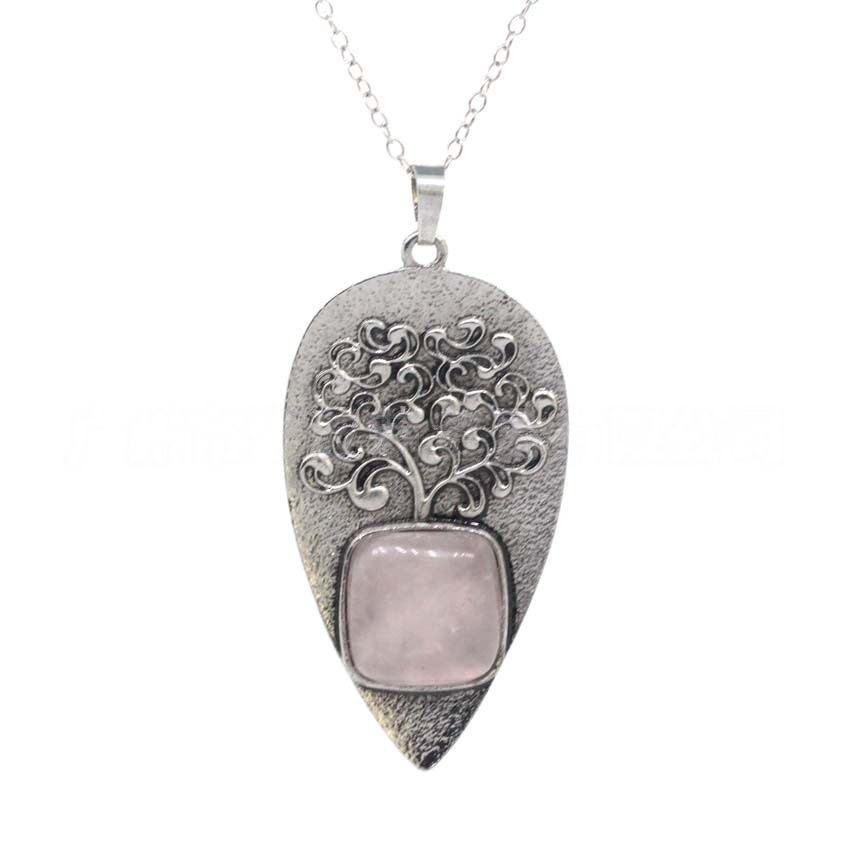
Tree of Life Pendant Necklace Guide: Meaning, Design and Choosing Between Rose Quartz, Amethyst, Lapis and Tiger Eye
The Tree of Life is one of the most widely used symbols in jewelry, and one of the most misunderstood, because people attach different meanings to it. Our Tree of Life Teardrop Pendant pairs the symbol with a single polished stone, and it comes in four versions. This guide explains where the symbol comes from, how the design is built, how to choose between the stones, and how to wear a pendant of this size.
Where the Tree of Life comes from
A tree that connects the earth, the sky and the underground appears in many unrelated traditions, which is part of why it feels so universal. Examples include the Norse world tree Yggdrasil, the Celtic crann bethadh (tree of life), the Tree of Life in the Hebrew Bible and the Kabbalistic Tree of Life diagram. Their meanings differ, but the shared idea is growth, connection and continuity: roots below, branches above, and a trunk linking them.
That is why it is worn as a general symbol of growth and resilience rather than as the emblem of a single belief. Wearers tend to attach their own meaning, which is part of the appeal.
How the design is built
The pendant is a textured, antique-style silver-tone teardrop. A raised Tree of Life spreads its curling branches across the upper half, while a square cushion-shaped cabochon sits at the base, positioned like the ground the tree grows from. The contrast is what makes it work: busy, detailed metalwork above, and one smooth, quiet stone below.
The key specifications:
- Pendant: approx. 2.2 × 1.2 in (56 × 30 mm)
- Stone: natural, square cushion cabochon (smooth, polished, no facets)
- Metal: silver-tone alloy with an antique finish
- Chain: approx. 19.7 in (50 cm), silver-tone
Choosing between the four stones
- Rose Quartz: pale blush to milky pink. The softest-looking option, and the one that contrasts most with the dark metal. Quartz, Mohs 7. See rose quartz.
- Amethyst: soft lavender to deep violet. A cool, rich color that pairs naturally with silver. Quartz, Mohs 7. See amethyst.
- Lapis Lazuli: deep royal blue, often with gold-colored pyrite flecks. The most dramatic and the most graphic against the silver. See lapis lazuli.
- Tiger Eye: golden amber to deep brown with a shifting band of light. The warmest option, and a good one if you prefer earth tones. Quartz, Mohs 7. See tiger eye.
A simple way to decide: choose the color you wear most often. Rose quartz suits soft neutrals and whites, amethyst suits black, grey and navy, lapis suits denim and white, and tiger eye suits browns, creams and olive.
What a cabochon is, and why it suits this design
A cabochon is a stone that is polished into a smooth, rounded dome rather than cut with facets. It shows color and pattern rather than sparkle, which suits a pendant where the metalwork is already busy. A faceted stone would compete with the detail; a smooth cabochon quietly balances it.
Wearing a larger pendant
At 2.2 inches long, this is a statement pendant, noticeably larger than a typical everyday charm. A few suggestions:
- Let it be the focal point. Keep the rest of the neckline simple and avoid layering another large pendant on top of it.
- Use the neckline. The 19.7 in chain places the pendant around the upper chest. It sits well over crew necks, collared shirts and knitwear, and over open necklines.
- Balance the weight. Because it is larger, pair it with small earrings or none.
- Style it as bohemian or minimalist. Over a plain top it looks modern; with a flowing dress it looks relaxed and bohemian.
About the silver-tone alloy and its antique finish
The metal is a silver-tone alloy, not sterling silver, with a deliberately darkened finish that emphasizes the carved branches. This finish is part of the look. To keep it looking good:
- Keep it away from perfume, lotion, chlorine and long soaks in water, which can wear the finish.
- Wipe with a soft dry cloth and store it in a pouch or dry box.
- Do not use abrasive polish or silver dip, which strip the antique finish and remove the contrast that defines the design.
The stone itself is durable and can be wiped with a soft damp cloth. Avoid harsh chemicals and hard knocks.
As a gift
The Tree of Life suits occasions about growth and new chapters, such as graduations, new jobs, moves and milestone birthdays. Because the symbol is not tied to one belief, it is an easy choice for someone whose taste you do not know well. Choosing the stone adds a personal note.
Frequently asked questions
Is the pendant solid silver?
No. It is a silver-tone alloy with an antique finish. If you prefer genuine sterling silver, see our 925 sterling silver collection.
Does the Tree of Life have a religious meaning?
The symbol appears in several traditions with different meanings. As jewelry, it is generally worn as a symbol of growth, connection and resilience, and wearers attach their own meaning.
Is the stone real?
Yes. Each stone is a natural stone, polished into a smooth cabochon. Color and pattern vary from stone to stone, so yours will be close to the photos but not identical.
How long is the chain?
About 19.7 in (50 cm), a length that sits around the upper chest.
Can I wear it every day?
Yes, with gentle care: keep it dry and away from perfume, and take it off for swimming, showering and exercise.
See photos and details on the product pages for rose quartz, amethyst, lapis lazuli and tiger eye, or browse the necklace collection.