925 Sterling Silver vs 14k Gold-Filled vs Stainless Steel: A Plain-English Guide to Crystal Jewelry Metals
Two necklaces can use the same amethyst and look nothing alike a year later, because the metal behind the stone decides how the piece wears, how it feels on sensitive skin and how it should be cared for. Product pages often say "silver-tone", "gold-tone", "925", "gold-filled" or "stainless steel" as if everyone knew the differences. This guide explains each one in plain terms, so you can match the metal to how you actually live: what each is made of, how long it lasts, who it suits, and how to look after it.
The short answer
- 925 sterling silver is real silver (92.5% pure) alloyed for strength. It is the classic choice for fine, everyday stone jewelry, and it can tarnish, which is normal and reversible.
- 14k gold-filled is a thick layer of real gold bonded to a brass core. It is far more durable than thin plating and gives a true warm gold look.
- Stainless steel is tough, resists tarnish and is good for daily wear, and a gold-tone finish adds the warm color.
- Silver-tone and gold-tone alloy describe the color of the finish, not the material underneath. These pieces are lower in price and are best treated as fashion jewelry.
925 sterling silver
The number 925 means 925 parts per thousand are pure silver, and the rest is usually copper, which makes the soft pure metal hard enough to hold a stone. It is a real precious metal and keeps its value in a way plated jewelry does not.
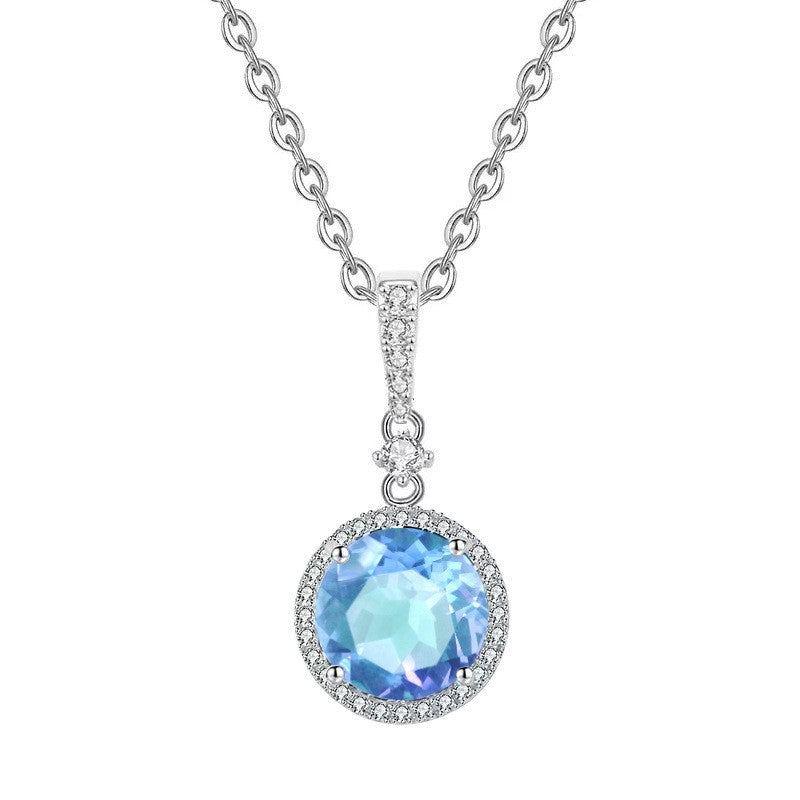
Why choose it: a bright, cool white color that sets off purple, blue and clear stones especially well; a refined look at a sensible price; and a long life if you care for it. Many of our 925 sterling silver necklaces and pendants are built this way, such as the amethyst wave bar necklace, the blue topaz halo pendant and the garnet wave bar necklace.
What to expect: silver reacts with sulfur in the air, cosmetics and sweat, and slowly darkens. That tarnish is a surface film, not damage. A soft polishing cloth brings the shine back in seconds. Store it dry and separate, ideally in a small pouch, and put it on after perfume or lotion rather than before.
14k gold-filled
Gold-filled is a different thing from gold plated, even though they sound alike. A gold-filled piece has a layer of real 14k gold mechanically bonded to a base metal core, and by regulation that layer makes up at least 5% of the item's weight. Gold plating, by contrast, is a microscopically thin coating applied electrically, and it can wear through within months.
Why choose it: you get the warm, honest color of gold, it holds up to showers, workouts and daily wear far better than plating, and it costs much less than solid gold. It is a good choice for pieces that sit against the skin all day, like a cuff. See the labradorite wire-wrapped cuff, the amethyst version or the blue chalcedony version, which are wrapped in 14k gold-filled wire. Our gold-filled cuff guide goes into more detail.
What to expect: the gold layer is thick but not infinite. Avoid chlorine, harsh cleaners and abrasive polishing, and wipe it dry after wearing. With care it can look good for years.
Stainless steel
Stainless steel is an iron alloy with chromium that forms a protective film, which is why it resists rust and does not tarnish the way silver does. It is hard, so it holds up to knocks and daily wear.
Why choose it: low maintenance and durable, a good fit for people who do not want to think about polishing. A gold-tone finish on steel, as on our tiger eye mix-and-match necklaces and rings and the lapis lazuli set, gives warm color on a hard-wearing base. See the mix-and-match guide for how to combine them.
What to expect: steel itself does not tarnish, but a coloured surface finish can wear gradually at points of contact. Be gentle with it, and keep it away from rough surfaces.
Silver-tone, gold-tone and antique-tone alloys
"Tone" is a word to read carefully. It tells you the color of the finish, not the metal. A silver-tone pendant is not silver, and a gold-tone one is not gold. These are usually base-metal alloys with a coated or plated finish, and they let jewelry with larger, bolder shapes be sold at a gentler price. A number of our statement pieces use this construction, including the tiger eye and amethyst Tree of Life teardrop pendants, which have an antique silver-tone finish (see the Tree of Life guide).
Why choose it: a bolder look for less, and it is easy to refresh your style. What to expect: the finish will eventually wear and the color beneath can show. Keep it away from water, perfume and sweat, remove it before sleeping or exercising, and treat it as a piece for occasions rather than for every day. If you have a known metal sensitivity, check the listing carefully or ask us first.
Copper-tone and antique finishes
Some of our raw-stone designs use a warm copper or antique bronze tone, which suits rough, natural stone, as on the raw amethyst statement necklace. These finishes are chosen for character, and they can mellow with wear. That patina is part of the look, but it is also a sign to handle the piece gently and keep it dry.
Which metal suits you?
- You wear it every day, including in the shower: 14k gold-filled or stainless steel.
- You want the classic fine-jewelry look: 925 sterling silver.
- You want a bold statement for a night out: a tone-finish piece is fine for occasional wear.
- You have sensitive skin: choose sterling silver, gold-filled or stainless steel over unspecified alloys, and ask us if you are unsure about nickel or other allergens.
- You are buying a gift: match the metal the person already wears; our gift guide has more.
Metal and stone together
Metal matters most when the stone is soft. Quartz-family stones, such as amethyst, citrine and clear quartz, are hard and tolerate almost any setting. Softer stones, such as fluorite and lapis lazuli, do better in protective settings and in pieces you wear thoughtfully. Whatever the metal, put jewelry on last and take it off first: after makeup, hair products and perfume, and before cleaning, swimming or sleeping.
A simple care routine
- Wipe each piece with a soft, dry cloth after wearing.
- Store pieces separately in a pouch, away from humidity.
- For sterling silver, polish gently with a silver cloth when it dulls.
- Avoid chlorine, bleach and ultrasonic cleaners, which can harm both metal and stone.
- Check clasps and settings now and then, and do not tug.
Frequently asked questions
What does 925 mean on jewelry?
It means the metal is 92.5% pure silver, with the remainder usually copper for strength. This is what is called sterling silver.
Is gold-filled the same as gold plated?
No. Gold-filled has a much thicker layer of real gold bonded to a base metal, so it lasts far longer. Plating is a very thin coating that wears off sooner.
Does sterling silver turn skin green?
Real sterling silver rarely does. Green marks usually come from the copper in low-quality alloys or worn plating reacting with sweat and moisture, not from the silver itself.
Is stainless steel good for sensitive skin?
Many people with metal sensitivity tolerate stainless steel well, but sensitivities vary. If you react to certain metals, ask us before buying.
What does "silver-tone" mean?
It means the finish is silver in color, not that it is made of silver. It is typically a coated base metal and is better suited to occasional wear.
How do I stop silver from tarnishing?
Keep it dry, store it in a sealed pouch, put it on after cosmetics and wipe it after wearing. If it does tarnish, a soft silver cloth restores it.
If you are also wondering how to judge the stones themselves, read how to tell if a crystal is real.
Browse the 925 silver collection, the bracelets and the necklaces, or read more in our guides.